
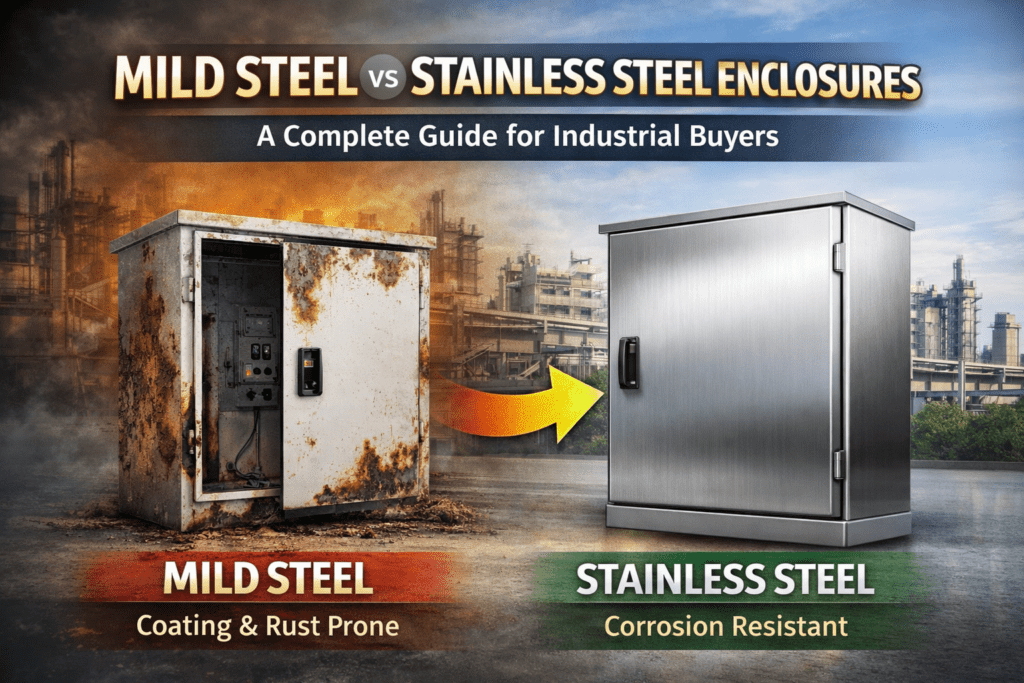
Choosing the right electrical enclosure isn’t just a technical decision—it directly impacts safety, durability, compliance, and long-term costs. Among the most common options in industrial environments are mild steel (MS) and stainless steel (SS) enclosures. While both serve the same basic purpose—protecting electrical and electronic components—their performance varies significantly depending on the application.
This guide explains the differences, advantages, limitations, and real-world use cases of mild steel and stainless steel enclosures so you can make a confident, informed decision.
What Is a Mild Steel Enclosure?
Mild steel is a low-carbon steel known for its strength, affordability, and ease of fabrication. Enclosures made from mild steel are typically coated with powder coating or paint to improve corrosion resistance.
Key Characteristics:
- Strong and durable under mechanical stress
- Cost-effective compared to stainless steel
- Easily weldable and customizable
- Requires surface coating for protection
Mild steel enclosures are widely used in indoor applications and controlled industrial environments where exposure to moisture or chemicals is minimal.
What Is a Stainless Steel Enclosure?
Stainless steel contains chromium, which forms a protective layer that resists rust and corrosion. Common grades used in enclosures include SS 304 and SS 316.
Key Characteristics:
- High resistance to corrosion and chemicals
- Suitable for harsh and outdoor environments
- Hygienic and easy to clean
- Higher initial cost but longer lifespan
Stainless steel enclosures are preferred in industries where cleanliness, durability, and environmental resistance are critical.
Mild Steel vs Stainless Steel Enclosures: Key Differences
1. Corrosion Resistance
- Mild Steel: Prone to rust if coating is damaged
- Stainless Steel: Naturally corrosion-resistant due to chromium content
👉 If your application involves moisture, chemicals, or outdoor exposure, stainless steel is the safer choice.
2. Cost Comparison
- Mild Steel: Lower upfront cost
- Stainless Steel: Higher initial investment
However, stainless steel often proves more economical in the long run due to reduced maintenance and replacement costs.
3. Strength and Durability
- Mild Steel: Strong and impact-resistant
- Stainless Steel: Strong with added resistance to environmental damage
Both materials are durable, but stainless steel performs better in extreme conditions.
4. Maintenance Requirements
- Mild Steel: Requires regular inspection and repainting
- Stainless Steel: Minimal maintenance
For industries aiming to reduce downtime and maintenance effort, stainless steel offers a clear advantage.
5. Appearance and Finish
- Mild Steel: Powder-coated finishes (custom colors possible)
- Stainless Steel: Natural metallic finish (polished or matte)
Stainless steel is often chosen where aesthetics and hygiene are important.
6. Application Environment
| Environment Type | Recommended Material |
|---|---|
| Indoor / Dry Areas | Mild Steel |
| Outdoor / Humid Areas | Stainless Steel |
| Chemical Exposure | Stainless Steel |
| Hygienic Applications | Stainless Steel |
Understanding SS Grades: 304 vs 316
Not all stainless steel is the same.
SS 304:
- Suitable for general industrial use
- Good corrosion resistance
- Cost-effective option within stainless steel
SS 316:
- Contains molybdenum for enhanced corrosion resistance
- Ideal for marine, chemical, and pharma environments
👉 If your application involves saltwater or aggressive chemicals, SS 316 is recommended.
Industry-Wise Material Selection
1. Pharma Industry
- Requires hygienic, corrosion-resistant surfaces
- Best Choice: Stainless Steel (SS 316 preferred)
2. Food Processing Industry
- Needs easy cleaning and contamination resistance
- Best Choice: Stainless Steel (SS 304 or SS 316)
3. Oil & Gas Industry
- Exposure to harsh chemicals and weather
- Best Choice: Stainless Steel
4. General Manufacturing
- Controlled indoor conditions
- Best Choice: Mild Steel (cost-effective)
5. Water Treatment Plants
- High moisture exposure
- Best Choice: Stainless Steel
IP Ratings and Material Selection
IP (Ingress Protection) ratings define how well an enclosure protects against dust and water.
- Mild steel enclosures can achieve high IP ratings with proper sealing
- Stainless steel enclosures provide additional protection against corrosion, even in high-IP environments
👉 For IP65/IP66 outdoor applications, stainless steel is more reliable long-term.
Cost vs Value: A Practical Perspective
Many buyers focus only on initial cost, but total cost of ownership matters more.
Mild Steel:
- Lower purchase price
- Higher maintenance cost
- Shorter lifespan in harsh environments
Stainless Steel:
- Higher purchase price
- Minimal maintenance
- Longer lifespan
👉 Over time, stainless steel often delivers better ROI, especially in demanding conditions.
Common Mistakes to Avoid
1. Choosing Based on Price Alone
Selecting mild steel for a corrosive environment can lead to frequent replacements.
2. Ignoring Environmental Conditions
Humidity, chemicals, and temperature fluctuations must be considered.
3. Over-Specifying Material
Using stainless steel in a completely dry indoor setup may not be cost-efficient.
4. Not Considering Future Expansion
Upgrading later can be more expensive than choosing the right material initially.
How to Choose the Right Enclosure Material
Ask these key questions:
- Will the enclosure be used indoors or outdoors?
- Is there exposure to moisture, chemicals, or salt?
- What is the required lifespan?
- Are there hygiene requirements?
- What is the maintenance capability of the facility?
👉 Your answers will clearly point toward either mild steel or stainless steel.
When Should You Choose Mild Steel?
Mild steel is ideal when:
- The environment is dry and controlled
- Budget is a major constraint
- Regular maintenance is manageable
- Indoor applications dominate
When Should You Choose Stainless Steel?
Stainless steel is the better choice when:
- The environment is harsh or outdoor
- Corrosion resistance is critical
- Hygiene standards must be maintained
- Long-term durability is required
Future Trends in Enclosure Materials
Industrial buyers are increasingly shifting toward stainless steel due to:
- Rising demand for hygienic systems
- Growth in pharma and food industries
- Need for longer lifecycle products
- Reduced maintenance requirements
At the same time, innovations in coating technologies are improving mild steel performance, making it a competitive option in budget-sensitive projects.
Frequently Asked Questions (FAQs)
1. Which is better: mild steel or stainless steel enclosure?
It depends on the application. Stainless steel is better for harsh environments, while mild steel is suitable for indoor use.
2. Is stainless steel worth the extra cost?
Yes, especially in environments where corrosion and maintenance are concerns.
3. Can mild steel enclosures be used outdoors?
They can, but only with proper coating and regular maintenance.
4. Which stainless steel grade is best for enclosures?
SS 304 is widely used, while SS 316 is الأفضل for highly corrosive environments.
5. Do stainless steel enclosures require painting?
No, they have natural corrosion resistance and do not require coating.
Final Thoughts
The choice between mild steel and stainless steel enclosures comes down to environment, budget, and long-term expectations.
- If your priority is cost and indoor usage, mild steel is a practical option.
- If your priority is durability, hygiene, and low maintenance, stainless steel is the smarter investment.
Instead of focusing only on upfront cost, consider performance over time. The right enclosure material not only protects your equipment but also reduces operational risks and maintenance expenses.